 The 5th brainstorming meeting organized by RepMan Reputation Research Center took place on December 13, 2016, at Bahçeşehir University’s Galata campus. The meeting, attended by 33 opinion leaders including corporate communications managers, representatives from civil society and professional organizations, academics, media professionals, and business representatives, discussed “Reputation Trends.” The full-day meeting was held in three parts. In the first part, the results of the RESPECT Research, conducted for the first time this year by RepMan Reputation Research Center, were shared.
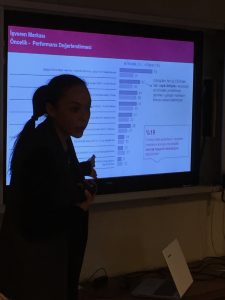
In the second part, the research results were discussed. In the third part, a brainstorming session was held on where the characteristics of being a reputable company are concentrated, taking into account developments in Türkiye and the world.Nuran Aksu, a member of the Advisory Board of RepMan Reputation Research Center, shared the results of the RESPECT Research. The main findings of the research are as follows:
- Unlike other executives, CEOs place more emphasis on “globalization” and “being innovative and a leader in the sector” on their agendas.
- CEOs paint a more hopeful and energetic picture of the future (or tend to see Turkish companies as more successful than they actually are).
- While middle-level managers place more importance on human happiness, senior management and CEOs prioritize issues that will create a difference (faster) in competition.
- The Anglo-Saxon perspective (Europe and especially the USA) and the Japanese perspective are very different.
- Fairness, ethics, and accountability are more deeply internalized in Japan. Therefore, crises generally originate in the West. There are examples of how the Japanese approach to crises and crisis management turn them into opportunities (Toyota way).
- With the new generations, valuing society and being environmentally conscious are gaining more importance.

The key issues that will stand out in reputation trends in the coming period are summarized as follows;
-
- Reputation is a matter of identity; companies that want to be reputable must be managed with “principles.” Companies that embrace the understanding of “keeping one’s word” and “this is not befitting of us” were cited as examples.
- For reputation to be on the CEO’s agenda, it must be linked to financials and made measurable within the company.
- The language of CEOs and communicators is different. For the two to meet at a common point, corporate communicators should also gain a place in company management (at the table).
- Stakeholders should be made aware of reputation; what they know and understand about reputation should be researched.
- In the future, it is necessary to create a reputation scorecard for companies and introduce international accreditation for it.
- In the last century, the entrepreneur and the investor were the same person. Today, the entrepreneur and the investor are different people. Reputation will be more valuable when the number of entrepreneurs, not investors, increases.
Thus, the venture that investors will invest in will make a difference.
-
- Turkey is a country with low public ownership. Reputation management cannot be considered without a higher percentage of companies being publicly listed.
- Today, many companies think they will not be affected by the crisis experienced by their competitors, but distrust is contagious; the crisis of one company affects the entire sector.
- The reputation of those who do their job with passion and are wholeheartedly dedicated to their work is built naturally.